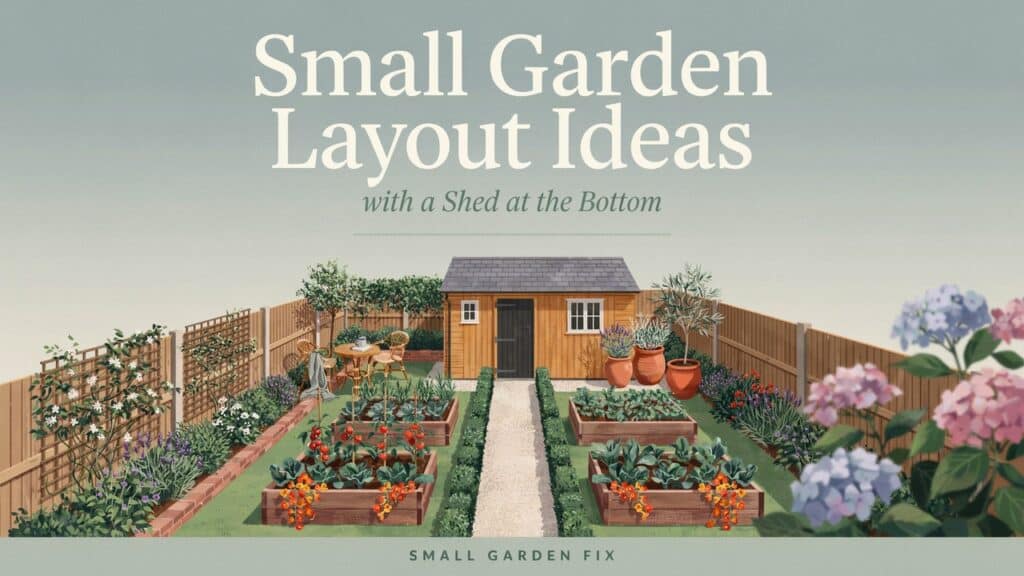
Small Garden Layout Ideas with a Shed at the Bottom
A shed at the bottom of the garden is very common in UK homes.
Sometimes it works well. Other times, it feels like the shed takes over the whole view. You look out from the house and the first thing you notice is a big wooden box at the end of the lawn.
But a shed does not have to ruin a small garden.
With the right layout, a shed can actually help give the garden structure. It can become part of the design rather than something you are trying to hide.
Whether you use your shed for tools, bikes, garden storage or just the usual mix of things you do not know where else to put, the trick is to plan the rest of the garden around it.
Here are some realistic small garden layout ideas with a shed at the bottom.
Start by deciding whether the shed is staying as it is
Before planning anything else, decide what is happening with the shed.
Ask yourself:
- Is the shed in good condition?
- Does it need painting or repairing?
- Is it too big for the garden?
- Do you actually use it?
- Could it be moved, or does it need to stay where it is?
- Does it block light?
- Does it dominate the view from the house?
If the shed is useful and in decent condition, it is probably worth keeping. Replacing or moving a shed can quickly add cost and hassle.
If it is rotten, leaking or far too big, it may be worth replacing it with something smaller or smarter before you spend money on the rest of the garden.
Make the shed look intentional
The biggest mistake is treating the shed like an afterthought.
If the shed is at the bottom of the garden, it is probably one of the first things you see from the house. That means it needs to look like it belongs there.
Simple improvements can make a big difference:
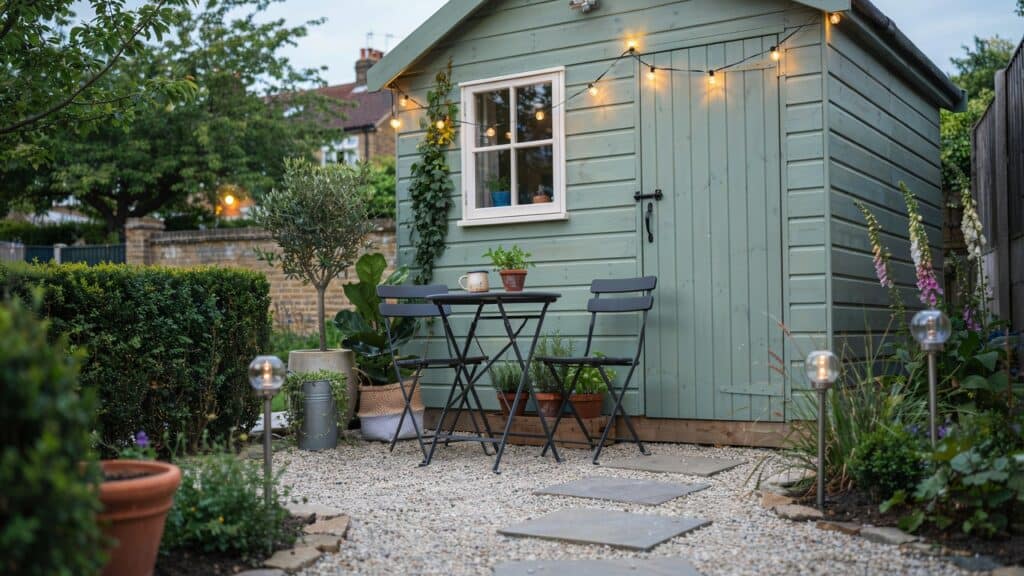
- Paint the shed in a colour that suits the garden
- Add gravel or paving around the base
- Put planters beside it
- Add trellis to one side
- Use climbing plants to soften the edges
- Add solar lights
- Keep the area around it tidy
A shed painted sage green, charcoal, black, soft brown or forest green can look much smarter than an old orange-toned timber shed.
You do not always need to hide the shed. Sometimes you just need to make it look cared for.
Layout idea 1: Straight path to the shed
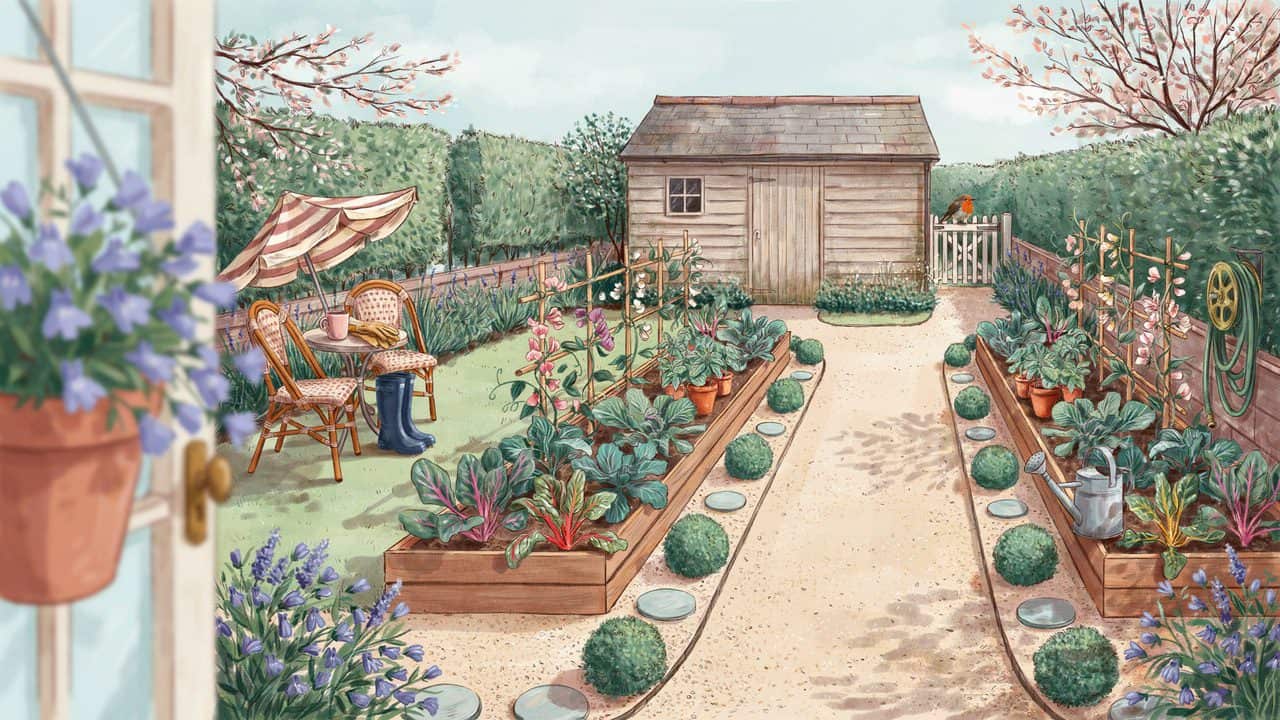
The simplest layout is a path running from the house to the shed.
This works well in narrow or rectangular gardens because it gives the space a clear line and makes the shed easy to access.
You could use:
- Gravel
- Stepping stones
- Paving slabs
- Brick
- Bark
- A simple grass path
To stop the garden looking too plain, add planting on either side of the path.
For example, you could have raised beds on one side and a small lawn or seating area on the other. This keeps the garden practical but still attractive.
This layout is good if you use the shed regularly and need a clear route to it.
Layout idea 2: Seating area near the house, shed at the back
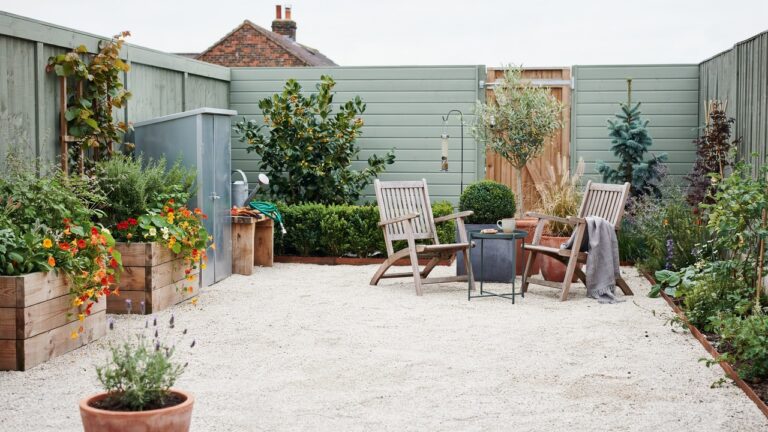
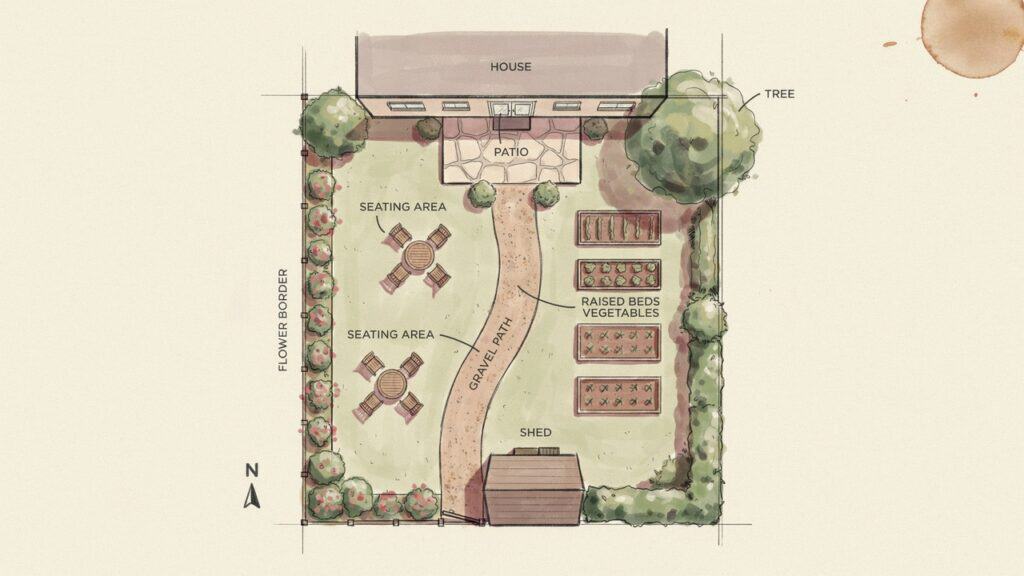
This is one of the most practical layouts for a small UK garden.
The seating area sits close to the house, usually on a patio or paved area. The shed stays at the bottom of the garden, with a simple path leading to it.
This works because the seating area is easy to use. You can bring food, drinks and cushions out without walking down the full garden.
The shed remains practical, but it does not have to be the main feature.
To make this layout feel better, soften the view towards the shed with:
- Pots
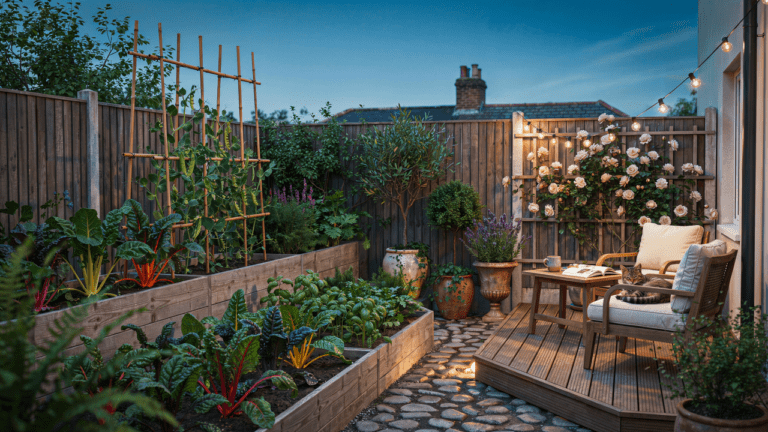
- Raised beds
- A small tree
- Trellis
- Climbers
- A gravel path
- Border planting
This layout is ideal if you want a garden that is easy to live with.
Layout idea 3: Seating area at the bottom near the shed
If the bottom of the garden gets the best sun, it may make sense to put the seating area near the shed.
This can work really well if you make the shed part of the seating zone.
For example, the shed could act as a backdrop for a bench, small table or pergola-style corner. You could paint the shed a dark colour, add planters, hang lights and create a cosy area around it.
This layout can make the bottom of the garden feel like a destination.
It works especially well if:
- The house end of the garden is shaded
- The bottom of the garden feels more private
- You want a quiet corner away from the house
- The shed looks good enough to become part of the design
Just make sure the seating does not block access to the shed doors.
Layout idea 4: Raised beds leading towards the shed
Raised beds can help make a shed at the bottom feel more connected to the rest of the garden.
Instead of having a plain lawn ending at the shed, you can create a growing area that leads the eye down the garden.
You could place raised beds:
- Along one fence
- On both sides of a path
- Around the shed
- In front of the shed
- Beside a greenhouse or growhouse
This works well if you like growing herbs, vegetables or flowers.
Timber raised beds can also help tie in with a wooden shed, making the whole garden feel more coordinated.
Layout idea 5: Hide part of the shed with planting
If the shed is useful but not very attractive, planting can help soften it.
You do not have to cover it completely. Just breaking up the shape can make a big difference.
Good options include:
- Tall planters
- Climbing plants
- Trellis
- Shrubs
- Ornamental grasses
- A small tree in a pot
- Raised beds with taller planting
Avoid planting anything too close if it will trap damp against the shed. Leave space for airflow and maintenance.
This layout is useful when you want the shed to be less obvious without removing it.
Layout idea 6: Create a working garden zone
If your shed is mainly used for tools, compost, pots and gardening equipment, you can turn the bottom of the garden into a practical working zone.
This might include:
- Shed
- Potting bench
- Compost bin
- Water butt
- Storage boxes
- Raised beds
- Small greenhouse or growhouse
The front or middle of the garden can then be kept more relaxed, with seating, lawn or decorative planting.
This is a good layout if you want the garden to be both useful and tidy.
Keeping the practical jobs at the bottom can stop tools and compost bags spreading across the whole garden.
Layout idea 7: Use the shed as a focal point
A shed does not always need to be hidden.
If it is in good condition, you can make it the focal point at the end of the garden.
To do this, make the shed look deliberate:
- Paint it a strong colour
- Add matching planters
- Use symmetrical pots either side of the door
- Add a small path leading to it
- Add lighting
- Use climbing plants around it
- Keep the doors and handles looking tidy
This can work especially well in a long narrow garden, where the shed naturally draws the eye.
A smart shed at the end can make the garden feel more finished.
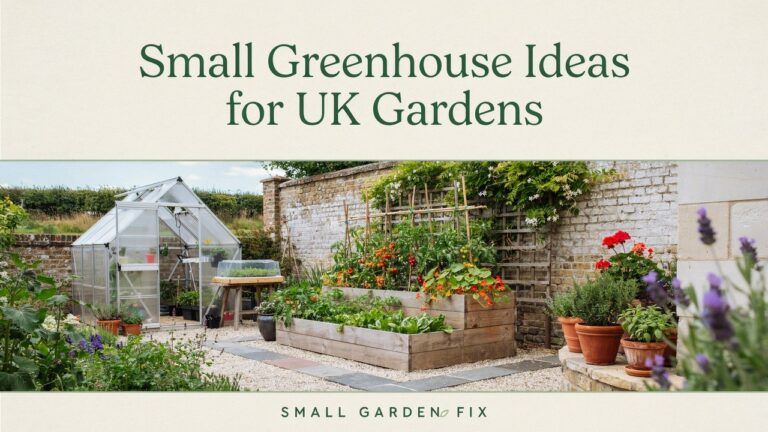
Layout idea 8: Add a greenhouse beside the shed
If there is enough space, a small greenhouse or growhouse can work well near the shed.
This creates a growing zone at the bottom of the garden.
It makes sense because garden tools, compost, seed trays and pots can all be kept nearby.
Before doing this, check:
- Where the sun hits the garden
- Whether the greenhouse will block the shed
- Whether you still have enough access
- Whether the area gets too shaded
- Whether there is space to move around safely
A greenhouse does not have to be large. A compact growhouse or lean-to style greenhouse may be enough for a small garden.
Layout idea 9: Keep the middle of the garden open
In a small garden, it is easy to clutter the space.
If you already have a shed at the bottom, try not to fill every other area with furniture, pots and features.
One simple layout is:
- Seating near the house
- Open lawn, gravel or simple path in the middle
- Shed and planting at the bottom
This keeps the garden feeling more spacious.
The open middle section gives the eye somewhere to rest and makes the garden feel less cramped.
This layout is good for families, pets, or anyone who wants a simple low-maintenance garden.
Layout idea 10: Use gravel around the shed
The area around a shed can easily become muddy or messy.
Gravel is a simple way to make it look tidier.
You can use gravel:
- Around the shed base
- As a path to the shed
- Around raised beds
- Under a small bench
- Around a potting area
Gravel works well with timber, plants and rustic garden styles. It can also make a shed area look more intentional and easier to maintain.
Use edging to stop the gravel spreading into the lawn or borders.
What to avoid
When planning a small garden layout with a shed at the bottom, try to avoid a few common mistakes.
Do not block the shed doors with furniture, pots or raised beds.
Do not forget that you still need to carry things in and out.
Do not place seating right next to a messy storage area unless you are planning to tidy it up.
Do not buy a greenhouse, pond or large furniture set before measuring the space properly.
Do not make the garden too busy. A shed, seating area, lawn, raised beds, pond, greenhouse and BBQ can be too much for a small space.
It is better to do a few things well than squeeze everything in.
A simple layout that works for most small gardens
If you are not sure where to start, try this basic layout:
- Seating area near the house
- Simple path leading down the garden
- Planting or raised beds along one side
- Open lawn, gravel or low-maintenance area in the middle
- Shed at the bottom
- Pots, trellis or small shrubs around the shed to soften it
This layout is simple, practical and realistic for many UK gardens.
It gives you somewhere to sit, keeps access to the shed, adds planting, and avoids making the garden feel overcrowded.
Final thoughts
A shed at the bottom of the garden does not have to be a problem.
In many small UK gardens, it is just part of the layout. The key is to make it look intentional and plan the rest of the garden around it.
Paint it, tidy the area around it, create a clear path, add planting, and decide whether the shed should be a quiet background feature or the main focal point.
A small garden does not need to be perfect. It just needs to work well for real life.
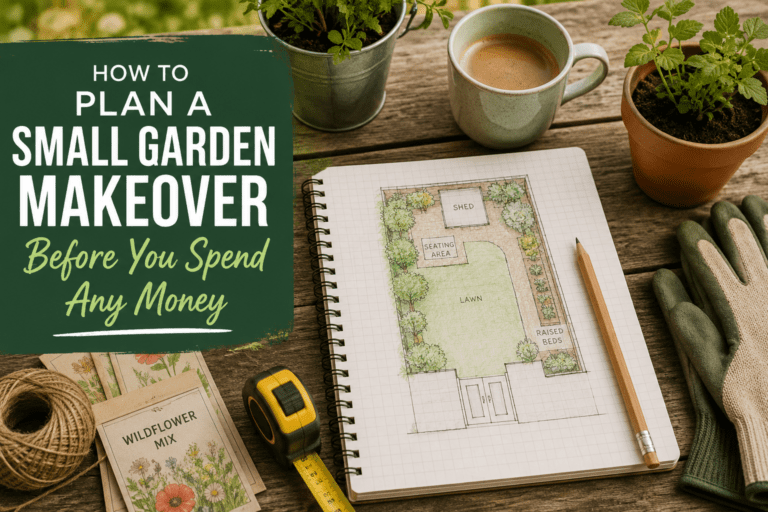
Before spending money, sketch out the space, measure carefully and decide what matters most.
If you are planning your own garden, download the free Small Garden Makeover Checklist to help work out your layout, budget and must-have features before buying anything.
Planning your own small garden makeover?
Download the free Small Garden Makeover Checklist and plan your layout, budget, seating, privacy, planting and must-have features before spending money.