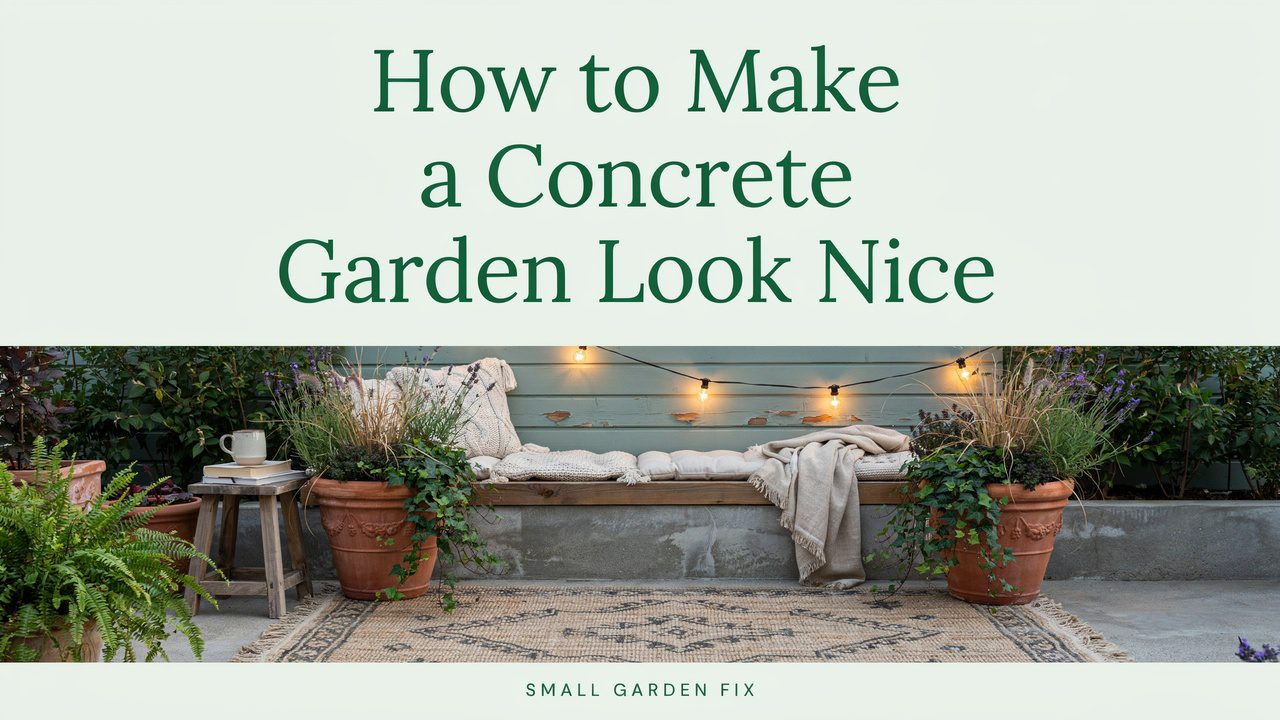
How to Make a Concrete Garden Look Nice
A concrete garden can feel cold, plain and unfinished.
It might be an old patio, a hard-standing area, a narrow courtyard, or a garden that has been paved over to keep maintenance low. Whatever the reason, concrete can make an outdoor space feel a bit harsh if it is left bare.
The good news is that you do not always need to dig it all up.
A concrete garden can still be made to look warm, useful and inviting with the right ideas. In many cases, you can improve it with planters, seating, gravel, paint, raised beds, screening and lighting.
If you are working with a small UK garden, it is worth thinking carefully before spending money. Concrete can actually be a useful base if you plan around it properly.
Here are realistic ways to make a concrete garden look nice without starting from scratch.
Start by cleaning the concrete
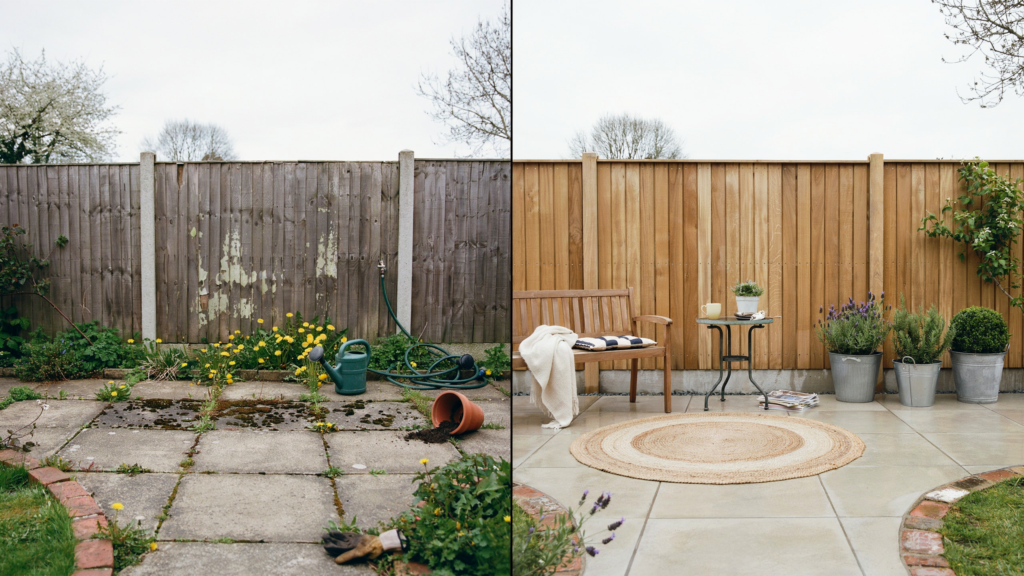
Before buying anything new, clean the concrete properly.
Old concrete often looks worse than it really is because it is covered in dirt, algae, moss, stains and general weathering. A good clean can make a big difference.
You can use:
- A stiff outdoor brush
- Patio cleaner
- A pressure washer
- Weed remover for cracks
- Warm soapy water for small areas
Be careful with pressure washing near loose pointing, old slabs, painted surfaces or drains. The aim is to freshen the space, not damage it.
Once the concrete is clean, you can see what you are actually working with.
Decide whether to hide it or improve it
There are two main ways to deal with a concrete garden.
You can either hide the concrete or make it look more intentional.
Hiding it might mean using:
- Outdoor rugs
- Gravel
- Decking tiles
- Large planters
- Raised beds
- Artificial grass
- Potted plants
- Furniture
Improving it might mean:
- Cleaning it
- Painting it
- Staining it
- Adding edging
- Creating zones
- Using it as a patio base
You do not always need to cover every inch. Sometimes leaving some concrete visible is fine if the rest of the garden feels styled and planned.
Add large planters
Large planters are one of the easiest ways to soften a concrete garden.
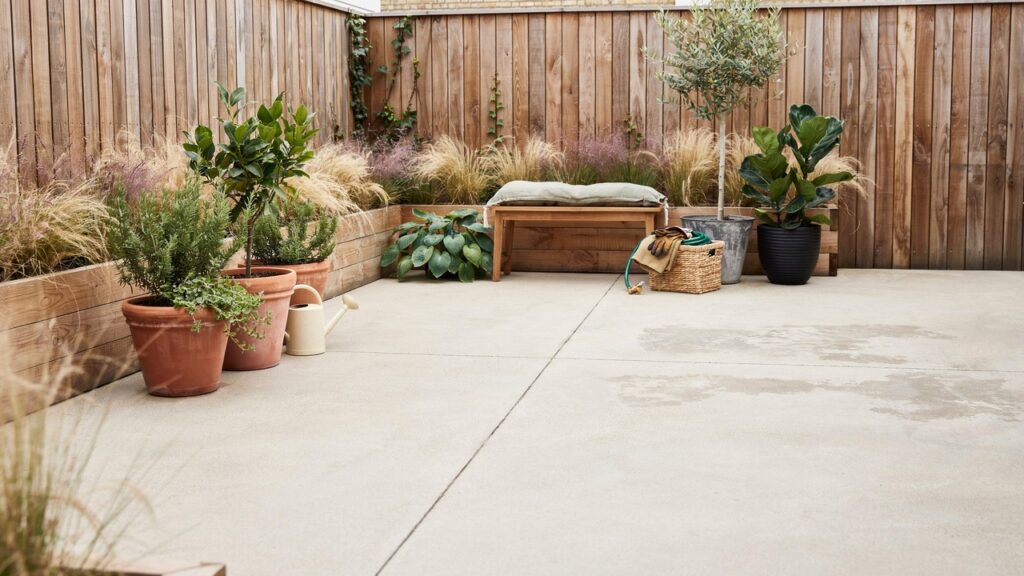
Concrete can feel empty and flat, so plants help bring height, colour and texture into the space.
Instead of using lots of tiny pots, choose a few larger ones. They usually look better and make the garden feel less cluttered.
Good places for planters include:
- Along the fence
- Around a seating area
- Beside the back door
- In corners
- Around a shed
- Along the edge of the concrete
You can use planters for shrubs, small trees, grasses, herbs, flowers or climbing plants.
If the concrete garden is small, try using tall planters or narrow troughs to save floor space.
Create a seating zone
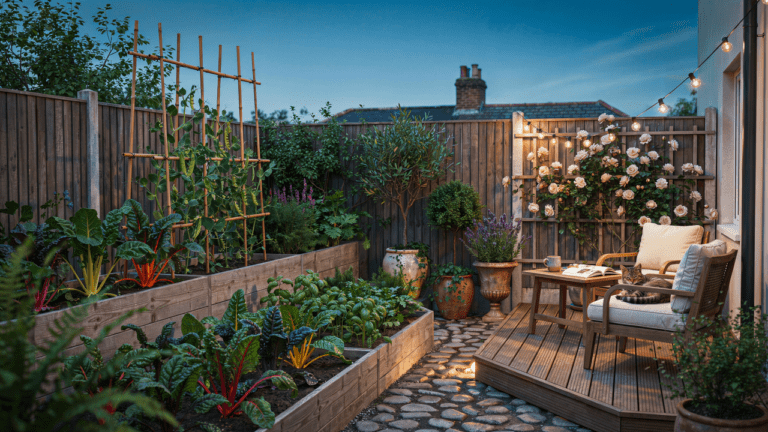
A concrete area can work well as a seating area because it gives you a firm, level surface.
The key is to make it feel like a proper outdoor room rather than a few chairs placed on bare concrete.
You can do this with:
- A small bistro set
- A bench
- Outdoor cushions
- A rug
- Planters around the edges
- A side table
- Warm lighting
- A privacy screen
Even a small seating area can change how the garden feels.
If the concrete is near the house, it can become a practical spot for morning coffee, evening drinks or summer meals outside.
Use an outdoor rug
An outdoor rug is one of the quickest ways to make concrete feel less harsh.
It helps define a seating area and adds colour, pattern and softness.
This works especially well on:
- Patios
- Courtyards
- Balconies
- Concrete seating areas
- Small paved gardens
Choose a rug designed for outdoor use. Indoor rugs will usually hold moisture and may get ruined quickly.
A rug will not fix damaged concrete, but it can make a plain area feel much more finished.
Add raised beds
Raised beds work well in concrete gardens because they let you add planting without digging up the ground.
You can place raised beds along a fence, around the edge of the garden, or beside a path or seating area.
They are useful for:
- Herbs
- Vegetables
- Flowers
- Small shrubs
- Wildlife-friendly planting
- Low-maintenance borders
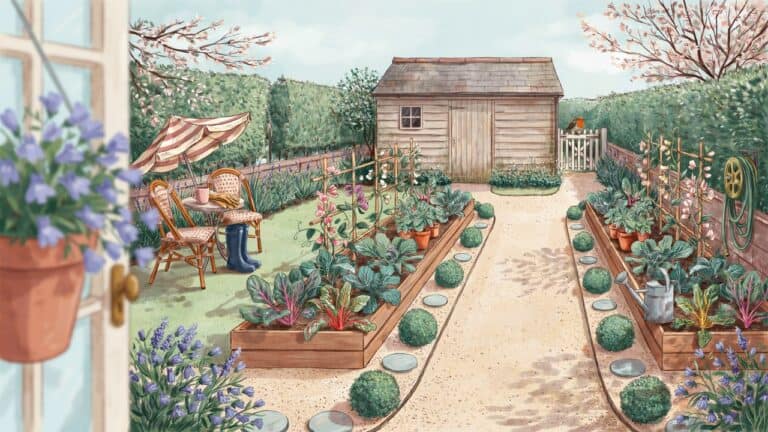
Raised beds also help give the garden structure. Instead of one flat concrete area, you start to create zones and edges.
Make sure raised beds have proper drainage and are suitable for the surface they are sitting on.
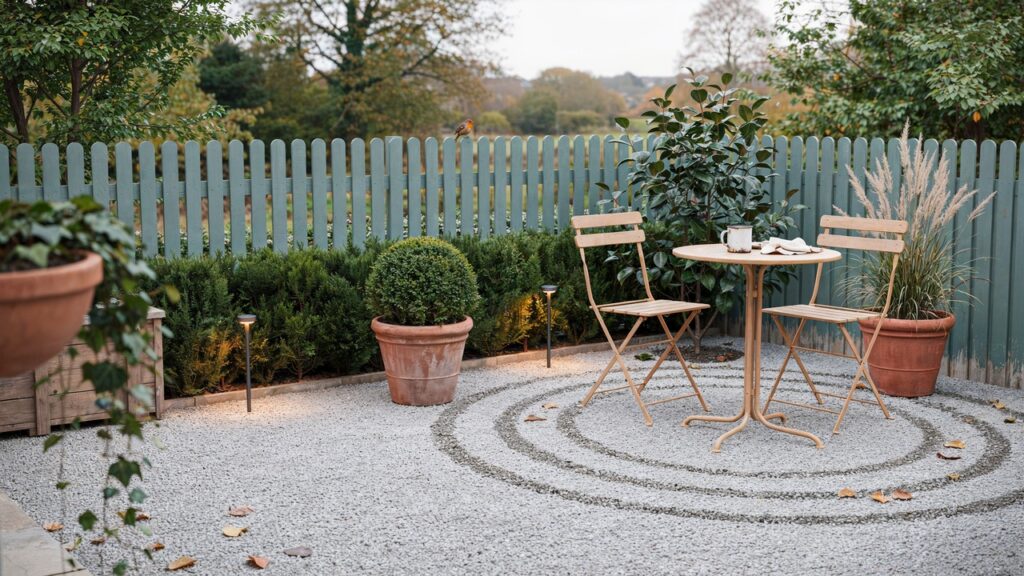
Use gravel to break up the space
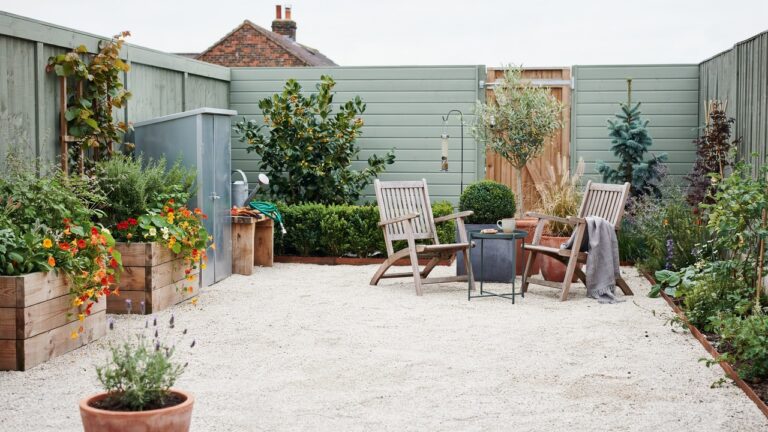
Gravel can make a concrete garden feel more natural and less like a yard.
You do not always need to cover the whole area. You could use gravel in one section, around planters, or as a border around raised beds.
Gravel works well with:
- Timber planters
- Terracotta pots
- Stepping stones
- Seating areas
- Sheds
- Rustic garden styles
- Mediterranean-style planting
If you are putting gravel over concrete, think about drainage and edging. You do not want water pooling or gravel spreading everywhere.
In some gardens, a gravel layer can make the space feel softer and more designed.
Paint the fence or walls
If your garden has concrete underfoot, the fences and walls become even more important.
A tired fence or bare wall can make the whole area feel dull.
Painting the fence can change the mood quickly.
Good colours for small gardens include:
- Sage green
- Forest green
- Charcoal
- Black
- Warm brown
- Soft cream
- Stone grey
Darker colours can make plants stand out and help boundaries feel less obvious. Lighter colours can make a shaded garden feel brighter.
If you cannot change the floor yet, improving the vertical surfaces can still make a big difference.
Add privacy screening
Concrete gardens can feel exposed, especially if they are overlooked by neighbours.
Adding privacy can make the garden feel more comfortable.
You could use:
- Trellis
- Slatted panels
- Bamboo screening
- Tall planters
- Climbing plants
- Outdoor curtains
- A pergola screen
You do not need to block the whole garden. Focus on the seating area first.
If you can make one corner feel private and cosy, the garden will feel much more usable.
Bring in height
Concrete gardens often feel flat because everything is at ground level.
Height makes the space more interesting.
You can add height with:
- Tall planters
- Climbing plants
- Obelisks
- Trellis
- Small trees in pots
- Wall planters
- Hanging baskets
- Shelving
- Pergolas
This is especially useful in small gardens because it draws the eye upwards instead of making you focus on the concrete.
A few taller features can make the garden feel more balanced.
Use pots with different textures
Plants are important, but the pots matter too.
A concrete garden can look much better when you mix natural textures.
Good pot materials include:
- Terracotta
- Timber
- Metal
- Stone-effect planters
- Woven-style planters
- Recycled plastic planters
- Fibre clay pots
Try not to use too many different colours and styles at once. A small garden usually looks better when the pots feel connected.
For example, you could use terracotta and timber for a warm rustic look, or black and grey planters for a modern look.
Add lighting
Lighting can make a concrete garden feel much more welcoming in the evening.
You do not need expensive outdoor electrics to start with. Solar and battery-powered options can work well for simple mood lighting.
Ideas include:
- String lights
- Solar lanterns
- Wall lights
- Path lights
- Lights around planters
- Lights near seating
- Shed lights
Warm lighting usually looks better than bright white lighting. It softens the space and makes the garden feel more relaxing.
Create zones
Even a small concrete garden can have zones.
For example:
- Seating near the house
- Planters along one side
- Storage near the shed
- Raised beds at the back
- BBQ corner on one side
- A small wildlife area in a container pond
Zones make the garden feel planned rather than empty.
You can create zones using planters, rugs, furniture, gravel, screens or raised beds.
This is especially useful if the garden is just one large concrete rectangle.
Cover a section with decking tiles
Interlocking decking tiles can be useful if you want to cover a small concrete area without building a full deck.
They can make a seating area feel warmer underfoot and more finished.
They are often used on:
- Patios
- Courtyards
- Balconies
- Small garden corners
- Concrete seating areas
Before using them, check that the surface is suitable and drains properly. If water gets trapped underneath, it can cause problems over time.
Decking tiles work best when used in a defined zone, such as under a seating area.
Add a small water feature
A small water feature can soften a concrete garden.
You do not need a large pond. A small bowl pond, container water feature or simple solar fountain can add movement and sound.
This works well in a small seating area because the sound of water can make the space feel calmer.
If you have children or pets, think carefully about safety and placement.
For a low-maintenance option, keep it small and simple.
Use a container pond
If you like the idea of a pond but cannot dig into the ground, a container pond might work.
This could be made from a large watertight planter, half barrel, trough or purpose-made container.
A container pond can bring wildlife interest to a concrete garden without major landscaping.
You can add aquatic plants and place the container where it gets some light but does not overheat.
Make sure it is stable, safe and suitable for the space.
Make storage look tidy
Concrete gardens can easily become dumping grounds for tools, compost bags, old pots and outdoor clutter.
Storage matters.
Good options include:
- Garden storage boxes
- Benches with storage
- Small sheds
- Wall hooks
- Outdoor shelving
- Potting benches
- Narrow storage units
If the garden is small, choose storage that fits the space instead of taking it over.
A tidy garden will always look better, even if the concrete is not perfect.
Use plants that suit containers
If most of the garden is concrete, many of your plants will probably be in pots or raised beds.
Choose plants that cope well in containers.
Options could include:
- Lavender
- Rosemary
- Thyme
- Ferns
- Hostas
- Grasses
- Heuchera
- Hydrangeas
- Small trees
- Hardy geraniums
- Salvia
- Strawberries
- Tomatoes
- Herbs
The right plants depend on sun, shade, wind and how much watering you are willing to do.
Container plants need more attention than plants in the ground, especially during hot weather.
Keep the colour palette simple
A concrete garden can start to look messy if there are too many different colours, pots, fences, furniture and accessories.
Choose a simple palette.
For example:
- Sage green, terracotta and natural wood
- Charcoal, white flowers and green foliage
- Black planters, gravel and timber
- Cream walls, warm lights and soft planting
- Forest green, brown and rustic pots
A simple colour palette makes even a budget garden look more put together.
Do not buy everything at once
It is tempting to buy furniture, pots, lights and plants in one go.
But with a concrete garden, it is better to build the space in stages.
Start with:
- Cleaning the concrete
- Choosing the seating area
- Adding planters
- Improving the fence or wall
- Adding lighting
- Adding extra features later
This helps you avoid wasting money on things that do not fit or do not work together.
A simple concrete garden makeover plan
If you want a simple starting plan, try this:
- Clean the concrete properly.
- Choose one main seating area.
- Add an outdoor rug to define the space.
- Place large planters around the edges.
- Paint the fence or add screening.
- Add warm lighting.
- Use raised beds or gravel to soften any harsh corners.
- Add storage so clutter does not build up.
This will not turn the garden into a show garden overnight, but it can make a plain concrete space feel much more useful and inviting.
Final thoughts
A concrete garden does not have to stay cold and boring.
You may not need to dig it all up or spend thousands on landscaping. Sometimes the best approach is to clean it, soften the edges, add planting, create a seating area and make the space feel intentional.
Start with one area first. Make a corner look good, then build from there.
With the right plan, even a plain concrete garden can become a comfortable outdoor space.
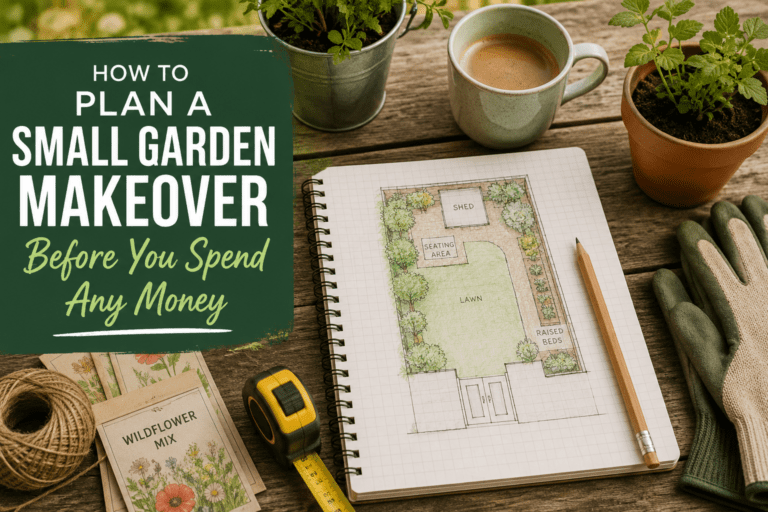
If you are planning your own garden makeover, download the free Small Garden Makeover Checklist to help work out your layout, budget and must-have features before spending money.
Planning your own small garden makeover?
Download the free Small Garden Makeover Checklist and plan your layout, budget, seating, privacy, planting and must-have features before spending money.