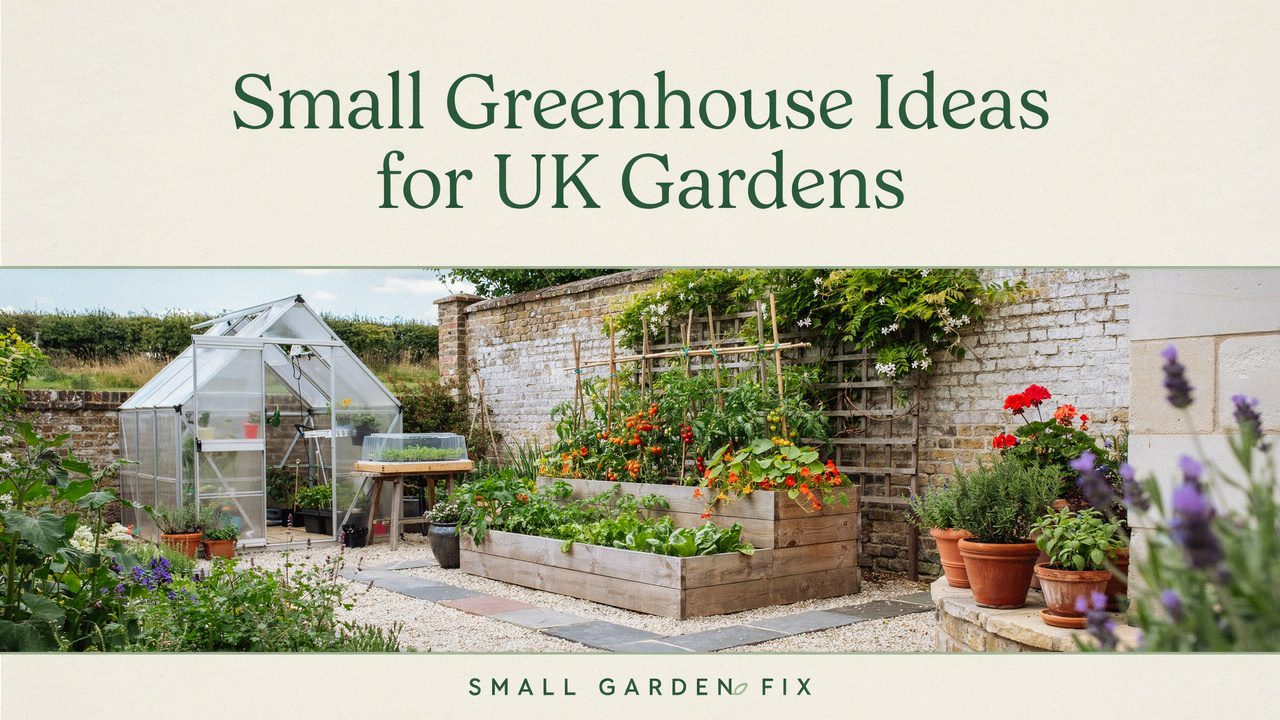
Small Greenhouse Ideas for UK Gardens
A greenhouse can be a brilliant addition to a small UK garden.
It gives you somewhere to start seeds, protect young plants, grow tomatoes, keep herbs going and make better use of the growing season. But if your garden is small, the idea of adding a greenhouse can feel tricky.
Will it take over the space?
Will it block the light?
Will it fit near the shed?
Is a mini greenhouse enough?
Do you need a full glass greenhouse, or would a growhouse do the job?
The good news is that you do not need a huge garden to enjoy greenhouse growing. There are plenty of compact greenhouse ideas that can work in patios, side returns, courtyards, small lawns and narrow gardens.
Here are some realistic small greenhouse ideas for UK gardens.
Start with what you want to grow
Before choosing a greenhouse, think about what you actually want to use it for.
A small greenhouse can be used for:
- Starting seeds
- Growing tomatoes
- Growing chillies
- Protecting young plants
- Growing herbs
- Overwintering tender plants
- Keeping seedlings away from bad weather
- Creating a small potting area
- Extending the growing season
If you only want to start a few seedlings and grow herbs, you may not need a full greenhouse. A small growhouse, cold frame or mini greenhouse might be enough.
If you want to grow tomatoes, cucumbers, peppers and lots of seedlings, you may need something taller and more practical.
The best greenhouse is not always the biggest one. It is the one that suits how you will actually use it.
Measure the space carefully
Small gardens do not leave much room for guessing.
Before buying a greenhouse, measure the area where it might go. Then leave extra room around it for access, cleaning and opening the door.
Think about:
- Width
- Depth
- Height
- Door clearance
- Path access
- Space around the sides
- Nearby fences or walls
- Access to water
- Distance from the house
- Whether it blocks anything important
A greenhouse that technically fits may still feel too big if it blocks a path, takes over the seating area or makes the garden feel cramped.
If in doubt, mark out the footprint with string, pots or garden canes before buying anything.
Choose the sunniest practical spot
A greenhouse needs light to work well.
In a small UK garden, the best place is usually the brightest practical spot that still allows easy access.
Watch the garden during the day and notice:
- Where the morning sun hits
- Which areas get afternoon sun
- Which corners stay shaded
- Whether the shed or fences block light
- Whether nearby trees cast shade
- Whether the spot is sheltered from strong wind
You do not always need all-day sun, but a greenhouse placed in deep shade will be less useful.
Also think about convenience. If the greenhouse is hidden at the far end of the garden and awkward to reach, you may use it less.
Mini greenhouse
A mini greenhouse is one of the easiest options for a small garden.
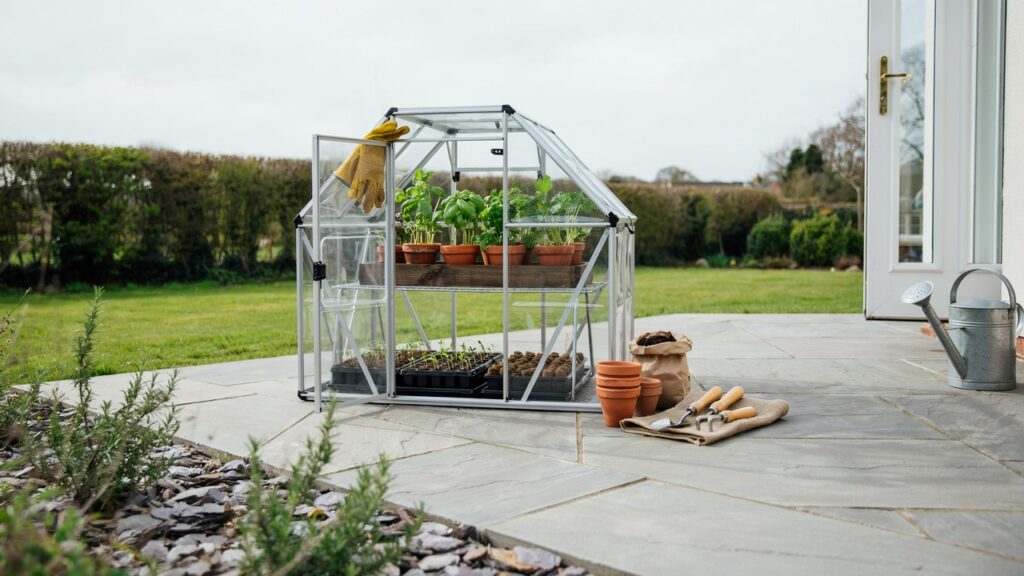
It usually has shelves and a clear cover, making it useful for seedlings, herbs and small pots. It can sit on a patio, balcony, path, side return or near the back door.
A mini greenhouse is good if:
- You have very limited space
- You are new to growing
- You want to start seeds
- You want something affordable
- You do not want a permanent structure
- You are renting
- You only need a small growing area
The downside is that mini greenhouses can be lightweight, so they may need securing in windy weather. They also have limited space for larger plants.
Still, for beginners, they are a sensible place to start.
Lean-to greenhouse
A lean-to greenhouse sits against a wall, fence or side of a building.
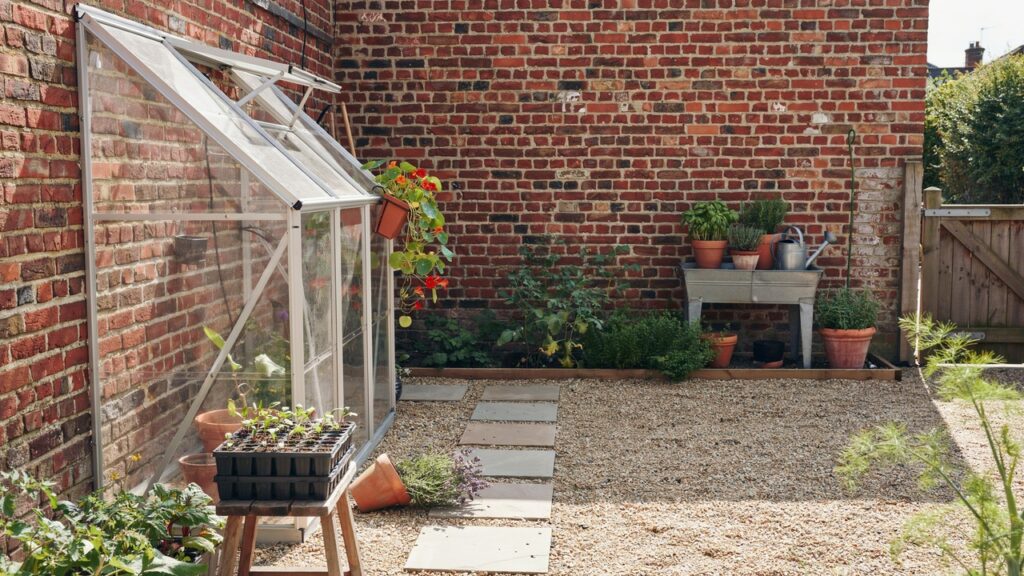
This can be ideal for small gardens because it uses vertical space and does not need as much room as a freestanding greenhouse.
A lean-to greenhouse can work well:
- Against a sunny wall
- Beside the house
- Along a side return
- Against a garage wall
- Near a patio
- In a courtyard garden
The wall behind it may also provide some shelter.
Before choosing a lean-to greenhouse, check that the wall gets enough light and that you have permission if the wall is shared or if you are renting.
Narrow greenhouse
A narrow greenhouse can work well in a long, slim garden.
Instead of taking up a wide area, it can sit along a fence or path.
This can be useful if you want to keep the middle of the garden open while still having a growing space.
A narrow greenhouse is good for:
- Tomatoes
- Seed trays
- Herbs
- Shelving
- Small pots
- Chilli plants
- Compact growing areas
Make sure there is still enough room to move inside or reach the plants comfortably. If it is too narrow, it may become annoying to use.
Small greenhouse near the shed
If you already have a shed at the bottom of the garden, it can make sense to create a growing zone nearby.
The shed can store tools, compost, pots and watering cans, while the greenhouse is used for growing.
This layout works well because everything garden-related is kept together.
A shed and greenhouse area might include:
- Shed
- Small greenhouse
- Potting bench
- Water butt
- Compost bin
- Raised beds
- Gravel path
- Tool storage
Just make sure the shed does not cast too much shade over the greenhouse.
Greenhouse on a patio
A greenhouse can work on a patio if the surface is level, stable and suitable.
This can be useful in a concrete garden or paved small garden where digging is not practical.
A patio greenhouse is good because:
- It is easy to access
- It keeps the growing area tidy
- It works well near the house
- It can be combined with pots and raised beds
- It does not need a lawn or soil border
Think about drainage, stability and wind exposure. A greenhouse on a hard surface may need careful fixing or weighting depending on the design.
Cold frame
A cold frame is not the same as a greenhouse, but it can be a useful alternative.
It is usually low to the ground and covered with glass or clear plastic. It helps protect seedlings and young plants from cold, wind and heavy rain.
A cold frame can be useful if:
- You have very little space
- You do not need a full greenhouse
- You want to harden off seedlings
- You want to protect young plants
- You grow in raised beds or pots
- You prefer something low and discreet
A cold frame is a good option for a beginner who wants to grow more without committing to a bigger structure.
Growhouse
A growhouse is usually a lightweight plastic-covered structure.
It can be taller than a mini greenhouse and may give you more room for tomatoes, chillies, herbs and seedlings.
A growhouse can be a practical budget option for a small garden.
It may suit you if:
- You want something affordable
- You need more height than a mini greenhouse
- You are not ready for a permanent greenhouse
- You want to test growing before spending more
- You have a patio or sheltered corner
The main thing to watch is wind. Lightweight growhouses can move, tip or tear if they are not secured properly.
Use greenhouse staging
In a small greenhouse, staging is important.
Staging means shelves or benches used to hold plants, trays and pots. It helps you use the space better.
Instead of filling only the floor, you can grow upwards.
You could use:
- Two-tier staging
- Folding shelves
- Potting benches
- Narrow shelving
- Hanging baskets
- Seed tray racks
- Wall-mounted storage
Good staging makes a small greenhouse much more useful.
Without it, the space can quickly become cluttered.
Keep a clear path
A small greenhouse can become frustrating if there is no room to move.
Before filling it with pots and trays, keep a clear central path or access space.
You need to be able to:
- Water plants
- Open windows or vents
- Remove dead leaves
- Move trays
- Clean the greenhouse
- Reach plants at the back
- Check for pests or disease
It is better to have slightly fewer plants and actually enjoy using the greenhouse than cram it full and avoid going in.
Think about ventilation
Greenhouses can get hot, even in the UK.
Ventilation helps control temperature and reduces the risk of mould, mildew and plant problems.
Look for options such as:
- Roof vents
- Side vents
- Opening doors
- Adjustable panels
- Mesh sections
- Removable covers on growhouses
Even a small greenhouse needs airflow.
If the greenhouse is in a sunny spot, ventilation becomes even more important.
Think about watering
Greenhouse plants can dry out quickly.
Before choosing a greenhouse position, think about how easy it will be to water.
Useful options include:
- Keeping a watering can nearby
- Using a water butt
- Placing the greenhouse near an outdoor tap
- Grouping thirsty plants together
- Using trays to hold water
- Using larger pots where possible
If watering is awkward, the greenhouse may become more of a chore.
Keep it tidy with storage
A greenhouse is meant for growing, but it can quickly become storage for everything else.
Seed trays, pots, labels, string, tools, compost and plant feed all need somewhere to go.
Use simple storage such as:
- Small shelves
- Lidded boxes
- Hooks
- Pot trays
- Tool racks
- Labels in a container
- A nearby shed or storage box
Keeping the greenhouse tidy makes it easier to use and more enjoyable to look at.
Match the greenhouse to the garden style
A greenhouse can be practical and still look good.
In a small garden, it will probably be visible from the house, so choose something that suits the space.
For a rustic garden, timber or dark-framed greenhouses can look lovely.
For a modern garden, black, grey or aluminium frames can work well.
For a budget or beginner garden, a simple growhouse may be enough as long as the area around it is tidy.
You can make the greenhouse feel more connected by adding:
- Gravel around the base
- Pots nearby
- Raised beds beside it
- A path leading to it
- Matching planters
- Climbers or soft planting nearby
The greenhouse should feel like part of the garden, not just something dropped into the corner.
Avoid common mistakes
When adding a greenhouse to a small garden, avoid these mistakes:
- Buying before measuring properly
- Putting it in deep shade
- Blocking access to the shed
- Choosing one that is too big
- Forgetting about wind
- Forgetting ventilation
- Not leaving room to open the door
- Filling it with too many plants
- Ignoring how it looks from the house
A greenhouse should make the garden more useful, not harder to live with.
Is a small greenhouse worth it?
A small greenhouse can be worth it if you enjoy growing or want to start.
It gives you more control than growing everything outside and can help protect plants from cold, wind and heavy rain.
It is especially useful for:
- Seed starting
- Tomatoes
- Chillies
- Herbs
- Tender plants
- Early growing
- Extending the season
But it is only worth it if you will actually use it.
If you are not sure, start small with a mini greenhouse, growhouse or cold frame. You can always upgrade later.
A simple small greenhouse setup
If you want a simple beginner setup, try this:
- Compact greenhouse or growhouse
- Two-tier staging
- Seed trays
- Watering can
- Plant labels
- Small tool box
- A few large pots
- Tomatoes or herbs
- Gravel or paving around the base
- Nearby storage for compost and spare pots
This is enough to get started without turning the whole garden into a growing project.
Final thoughts
A greenhouse can work in a small UK garden if you choose carefully.
You do not need the biggest one. You need one that fits your space, gets enough light and suits what you want to grow.
Start by measuring the garden, watching the sun, and deciding whether you need a mini greenhouse, lean-to greenhouse, growhouse, cold frame or compact freestanding greenhouse.
With the right setup, even a small greenhouse can make your garden more useful and enjoyable.
If you are planning your own garden, download the free Small Garden Makeover Checklist to help work out your layout, budget and must-have features before spending money.
Planning your own small garden makeover?
Download the free Small Garden Makeover Checklist and plan your layout, budget, seating, privacy, planting and must-have features before spending money.