Low Maintenance Small Garden Ideas for UK Homes
A small garden should make life easier, not give you another long list of jobs.
For many people, the dream is simple: a garden that looks tidy, feels relaxing, and does not need constant mowing, pruning, watering and weeding.
That is where low maintenance garden design helps.
A low maintenance garden does not mean a boring garden. It does not have to be all paving, plastic grass and empty pots. With the right layout, plants and materials, even a small UK garden can feel green, useful and attractive without taking over your weekends.
Here are realistic low maintenance small garden ideas for UK homes.
Start with a simple layout
The easier the layout, the easier the garden will be to look after.
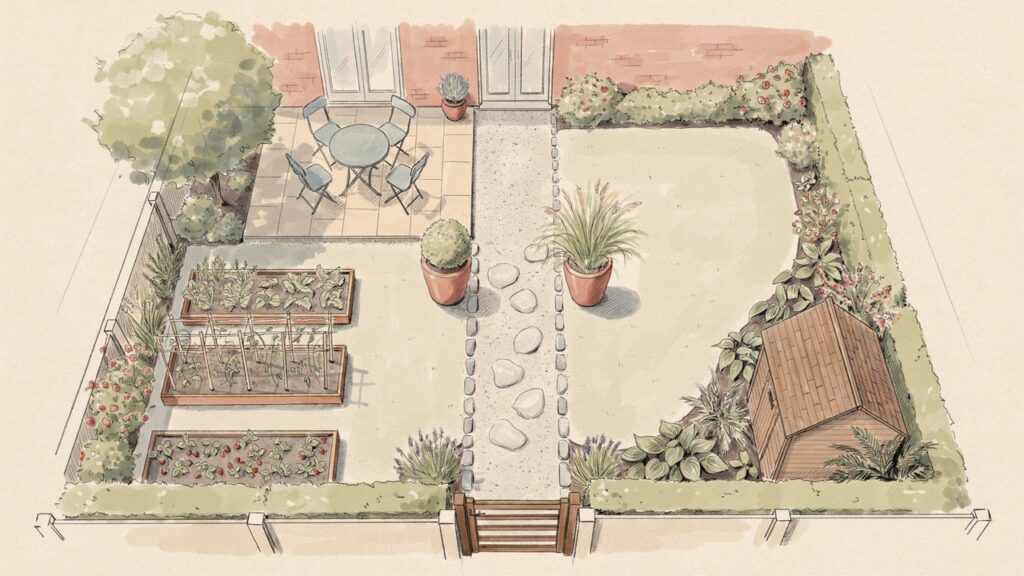
Small gardens can quickly feel messy if there are too many areas, shapes, pots, ornaments and features. A simple layout usually works better.
A good low maintenance layout might include:
- One main seating area
- One clear path
- A few large planters
- Simple borders or raised beds
- A shed or storage area
- Easy-care plants
- Gravel, paving or lawn in clear sections
Try not to squeeze in too many ideas at once. A small garden with a seating area, tidy planting and good storage will usually look better than one filled with too many features.
Choose one main seating area
If you want the garden to be easy to manage, choose one main seating area and make it work properly.
This could be:
- A small patio near the house
- A bench at the end of the garden
- A bistro table on a paved area
- A corner seating area with planters
- A simple gravel seating zone
One good seating area is better than several awkward little spaces.
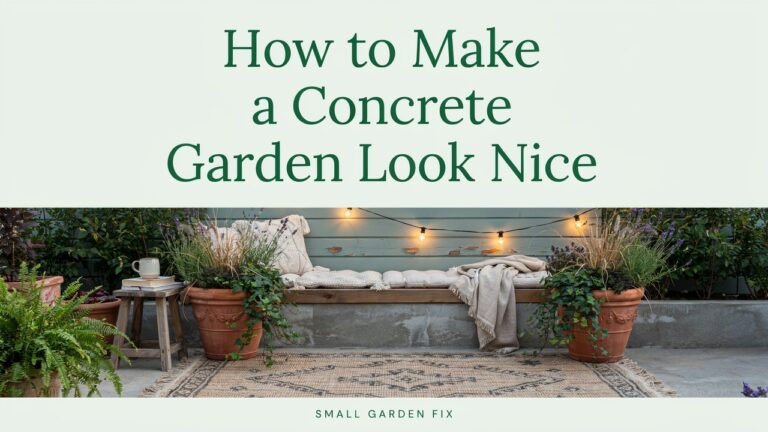
Keep the furniture simple, easy to clean and suitable for outdoor use. If you need cushions, use a storage box nearby so they are not left out in the rain.
Use larger pots instead of lots of small ones
Lots of tiny pots can look cluttered and need more watering.
A few larger planters usually look smarter and are easier to manage. They hold more compost, give plants more room, and help create a stronger design.
Large pots work well near:
- The back door
- A seating area
- A shed
- A fence
- A patio corner
- A path entrance
Choose pots that suit the style of the garden. Terracotta, timber, fibre clay, metal or recycled plastic planters can all work well.
For a low maintenance garden, avoid having too many different pot colours and styles. Keeping things simple makes the space feel calmer.
Pick reliable plants
Plants are what stop a low maintenance garden from feeling cold or empty.
The trick is to choose reliable plants that suit the conditions.
For many UK gardens, good low maintenance choices can include:
- Lavender
- Rosemary
- Ferns
- Hostas
- Heuchera
- Hardy geraniums
- Hydrangeas
- Ornamental grasses
- Hebe
- Choisya
- Skimmia
- Salvia
- Sedum
- Box alternatives such as Ilex crenata
- Small evergreen shrubs
Before buying plants, check whether your garden is sunny, shaded, dry, damp or windy. A plant is only low maintenance if it is happy where you put it.
Use evergreen plants for year-round structure
Evergreen plants keep their leaves through the year, which helps the garden look better in winter.
In a small garden, this matters because bare soil and empty borders can make the space feel unfinished for months.
Evergreens can be used in:
- Borders
- Pots
- Raised beds
- Around seating areas
- Near sheds
- Along fences
You do not need the whole garden to be evergreen. Just a few strong evergreen plants can help give the garden structure.
Mix them with flowers, herbs or grasses for a softer look.
Reduce the lawn if it causes more work than joy
A lawn can be lovely, but it is not always low maintenance.
Small lawns can become muddy, patchy, shaded or awkward to mow. If your lawn is more trouble than it is worth, think about reducing it.
You could replace part of the lawn with:
- Gravel
- Paving
- Raised beds
- A seating area
- A path
- Ground cover plants
- Bark around planting areas
You do not have to remove the lawn completely. Sometimes making it smaller and simpler is enough.
A neat small lawn is easier to care for than a complicated shape with lots of awkward edges.
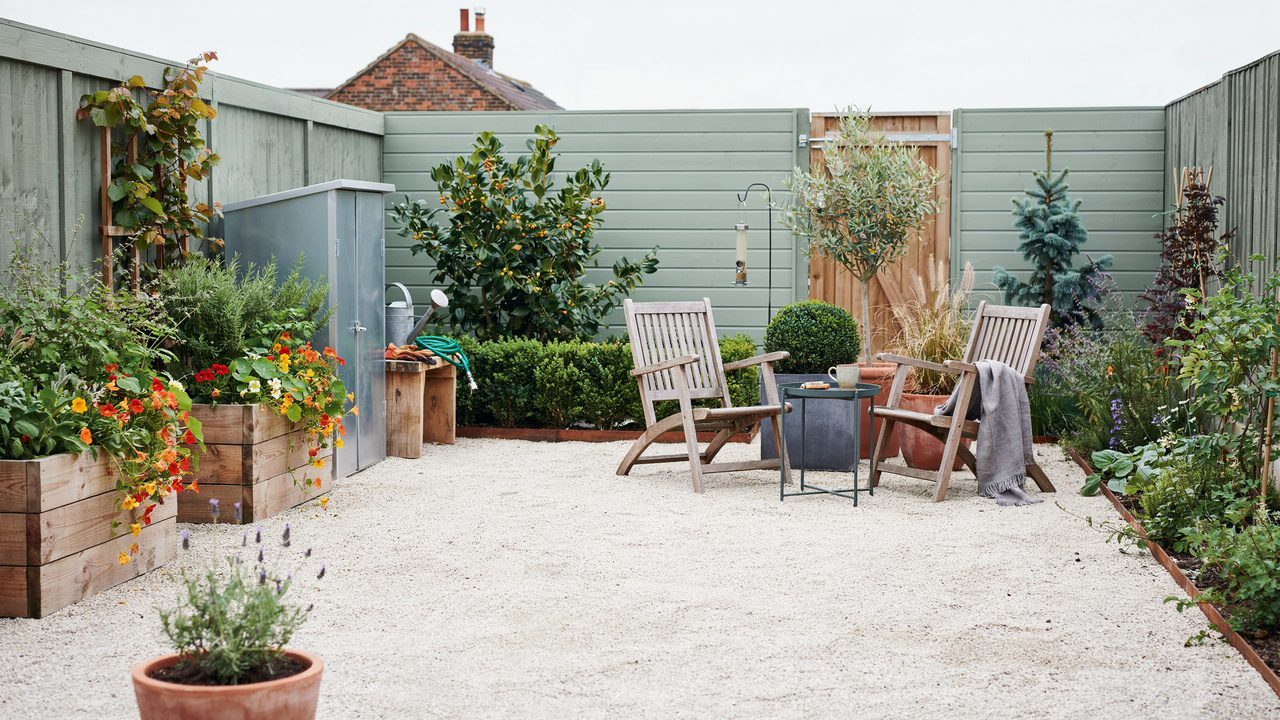
Use gravel for easy-care areas
Gravel is useful in small low maintenance gardens because it can make an awkward area look tidy.
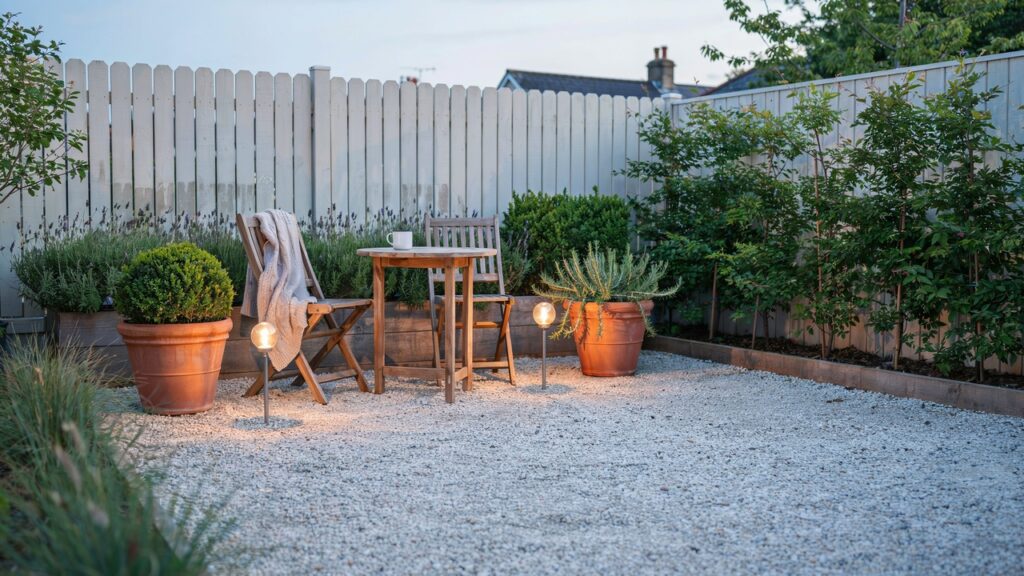
It works well for:
- Paths
- Seating areas
- Around raised beds
- Around sheds
- Along fence edges
- Dry planting areas
Gravel also suits a rustic, natural garden style.
Use edging to keep gravel in place and stop it spreading into borders or lawn. A weed membrane may help in some areas, although you still need to watch for weeds that seed into the gravel from above.
Add raised beds for tidy planting
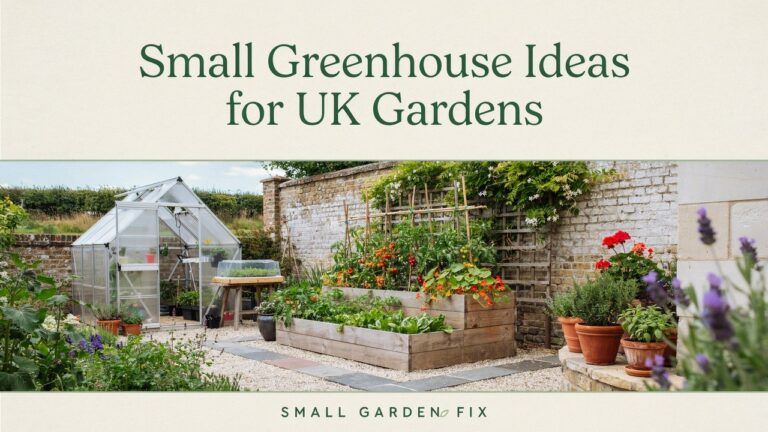
Raised beds are a good way to keep planting organised.
They can make a small garden look more structured and easier to manage. Instead of plants spreading everywhere, they are kept in clear sections.
Raised beds can be used for:
- Herbs
- Vegetables
- Flowers
- Shrubs
- Wildlife-friendly planting
- Low-maintenance borders
Timber raised beds suit a natural garden style, while metal or composite beds can look more modern.
If you are placing raised beds on concrete or paving, check drainage before filling them.
Use mulch to reduce weeds
Mulch is one of the simplest ways to make a garden easier to look after.
It helps cover bare soil, reduce weeds and keep moisture in the ground.
Common mulches include:
- Bark
- Wood chip
- Compost
- Gravel
- Slate chippings
- Decorative stone
Mulch also makes borders look tidier.
For a natural garden, bark or wood chip can work well. For a modern or Mediterranean-style garden, gravel or stone may suit better.
Keep borders simple
A low maintenance border does not need lots of different plants.
In fact, repeating a smaller number of reliable plants often looks better and is easier to manage.
Instead of buying one of everything, choose a few plants and repeat them.
For example:
- Lavender along a sunny path
- Ferns and hostas in a shady corner
- Grasses and evergreen shrubs along a fence
- Rosemary and sage near a seating area
- Hydrangeas in larger borders or pots
Repeating plants helps the garden feel more designed and less random.
Use climbing plants carefully
Climbing plants can be useful in a small garden because they add height without taking up much floor space.
They can help cover fences, soften walls and create privacy.
But not all climbers are low maintenance. Some grow fast and need regular control.
For easier care, choose climbers carefully and make sure they have proper support.
Use climbers on:
- Trellis
- Pergolas
- Fence panels
- Arches
- Wall supports
- Privacy screens
A single well-placed climber can make a small garden feel greener without filling the floor with plants.
Choose furniture that is easy to clean
Garden furniture can become a job of its own if it needs constant care.
For a low maintenance garden, choose furniture that suits your lifestyle.
Think about:
- Does it need covering?
- Can it stay outside?
- Is it easy to wipe clean?
- Will it rust?
- Does it need oiling or treating?
- Is it too big for the space?
If you do not want much maintenance, avoid furniture that needs regular treatment unless you are happy to do it.
A simple bench, metal bistro set or weather-resistant outdoor set may be easier than large furniture with lots of cushions.
Add storage so clutter does not build up
A garden is much easier to keep tidy when everything has a place.
Good storage can hide:
- Cushions
- Tools
- Compost bags
- Toys
- Pots
- BBQ equipment
- Watering cans
- Small garden accessories
Storage ideas include:
- A shed
- A storage bench
- A garden storage box
- Wall hooks
- Outdoor shelving
- Tall narrow storage units
In a small garden, clutter stands out quickly. Good storage makes the whole space feel calmer.
Paint fences in a practical colour
Fence colour can make a big difference in a small garden.
A tired fence can make even a tidy garden look neglected.
For a low maintenance look, choose a colour that works well with plants and does not show every mark.
Good options include:
- Sage green
- Forest green
- Charcoal
- Black
- Warm brown
- Soft grey
Darker colours can help fences fade into the background and make greenery stand out.
Painting a fence takes effort at the start, but it can make the garden feel much more finished.
Use solar lighting
Lighting can make the garden feel better in the evening without needing a major project.
Solar lights are a simple option for low maintenance gardens.
You could use:
- Solar path lights
- Fence lights
- Lanterns
- String lights
- Lights around planters
- Shed lights
Warm lighting usually looks softer and more inviting than bright white lighting.
Do not overdo it. A few well-placed lights often look better than lots of lights everywhere.
Avoid too many delicate plants
Some plants look beautiful in the garden centre but need a lot of attention once you get them home.
For a low maintenance garden, be careful with plants that need:
- Constant watering
- Regular feeding
- Winter protection
- Frequent pruning
- Deadheading every few days
- Very specific soil
- Protection from wind or frost
There is nothing wrong with choosing a few special plants, but build the garden around reliable ones first.
Make watering easier
Watering can become one of the biggest jobs in a small garden, especially if you have lots of pots.
To make watering easier:
- Use larger pots
- Group pots together
- Choose drought-tolerant plants for sunny spots
- Add mulch to borders
- Use water-retaining compost in containers
- Place thirsty plants where you can reach them easily
- Consider a water butt if you have space
The easier the garden is to water, the more likely you are to keep it looking good.
Do not overfill the garden
A small garden needs breathing space.
It is tempting to keep adding things, especially when you see nice ideas online. But too much furniture, too many pots and too many features can make the garden feel smaller and harder to manage.
A low maintenance garden works best when every feature has a purpose.
Before adding something new, ask:
- Where will it go?
- Do I need it?
- Will I use it?
- Will it create more work?
- Does it fit the style of the garden?
Sometimes the best improvement is taking something away.
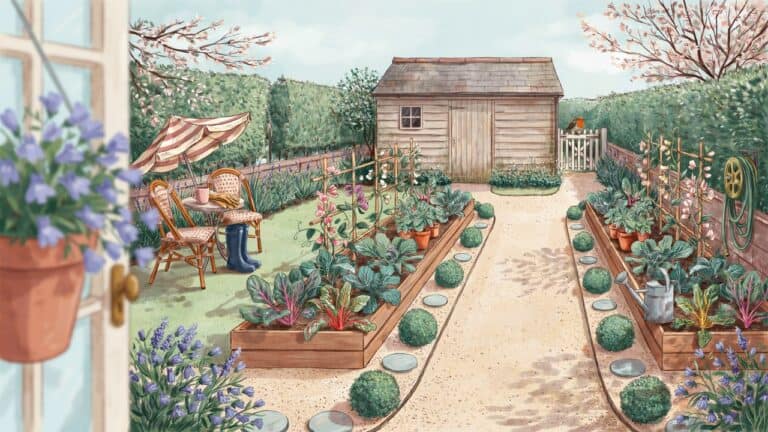
A simple low maintenance small garden layout
If you want a simple starting point, try this layout:
- Seating area near the house
- Gravel or paving for the main surface
- Raised beds or large planters along one side
- Evergreen shrubs for structure
- A clear path to the shed or storage area
- Solar lighting near seating and paths
- A storage box for cushions and tools
- Mulch on exposed soil to reduce weeds
This gives you a garden that is practical, tidy and easier to manage.
You can always add extra features later, but the base of the garden will already work.
Final thoughts
A low maintenance small garden does not have to be plain.
The aim is to make the garden easier to enjoy and easier to keep tidy.
Start with a simple layout. Choose reliable plants. Use larger pots, raised beds, mulch, gravel and good storage. Avoid clutter and do not try to fit everything in at once.
The best low maintenance garden is one that suits your real life.
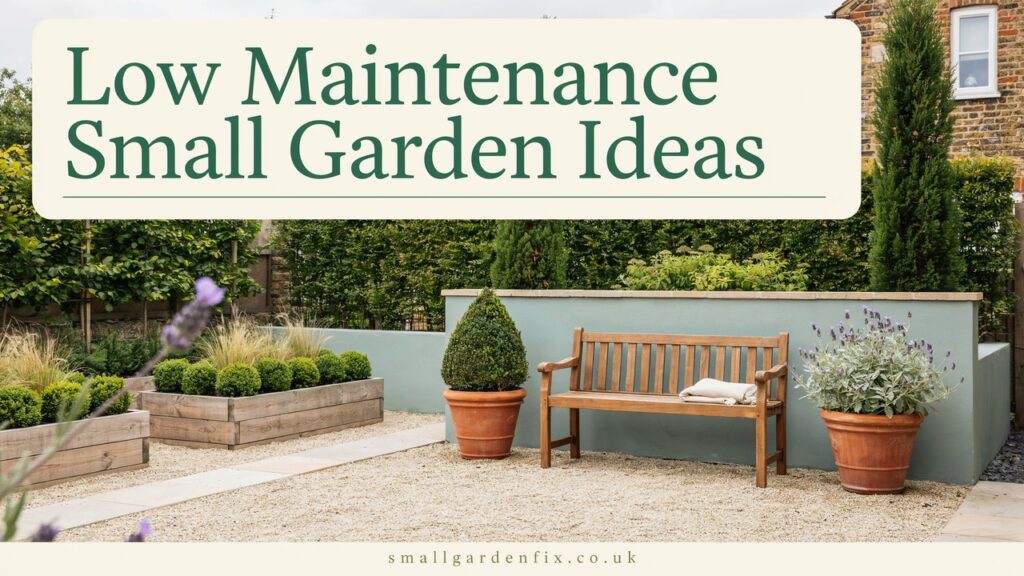
If you are planning your own garden, download the free Small Garden Makeover Checklist to help work out your layout, budget and must-have features before spending money.
Planning your own small garden makeover?
Download the free Small Garden Makeover Checklist and plan your layout, budget, seating, privacy, planting and must-have features before spending money.